Technical University Berlin
Standardisation and Sustainability
Standardisation and Sustainability. Bachelor's and Master's students of heterogeneous backgrounds
The pilot was designed to teach students from a range of bachelor’s and master’s programs of the Technical University Berlin the fundamentals of standardization and sustainability. Through the Berlin University Alliance (BUA), students from other universities in Berlin, such as the Humboldt University, were also able to attend the pilot.
The pilot curriculum defined sustainability in a broad manner. Therefore, apart from environmental and climate protection, it combined topics such as gender issues, geopolitics or energy security with standardisation. Thus, participants gained a comprehensive and practical overview of standardisation and its importance and linkages with several areas and industries.
Essentially, the pilot was composed of a weekly lecture and exercise series that lasted 14 weeks. Each week, a 1.5 hour lecture and a 1.5 hour exercise session were conducted. While many lectures were held by the course instructors, guest speakers of different industries and academic backgrounds were invited to present their expertise. For instance, a representative of the German national standardisation body, Deutsches Institut für Normung e.V. (DIN), introduced participants to her organization and played a serious game about standardisation with the group. Further, a representative of a large German semiconductor manufacturer elaborated on geopolitical implications of standardisation in the semiconductor industry. The inclusion of guest speakers helped to keep participants engaged in the pilot by touching upon diverse industries. Participants that finished the course were awarded 6 ECTS credits and a certificate from DIN.
The following lectures and exercises comprised the general content of the pilot. A non-exhaustive list of subtopics of each unit is added for further clarification.
Lectures:
- Formal Standardisation:
- Introduction to standardisation
- Basics of standardisation
- Standards organization
- Standardisation landscape
- Linkages between standard development organisations and hierarchies
- German national standardisation body
- Private Standards
- Introduction to private standards
- Private standards organisations
- Economic effects of private standards
- Quality Infrastructure Management:
- Introduction to QI
- Pillars of QI
- Economic effects of QI
- Historical examples of QI development
- New initiatives and developments of QI
- Standardisation and Open Source:
- Introduction to open-source software
- Open standards
- Importance of open-source software
- Implications of open-source development
- Economic Effects of Standardisation: Growth and Trade
- Introduction to economic effects of standardisation
- Benefits of standardisation and effects on trade
- Barriers of standardisation
- Current debates, challenges and outlook
- Blockchain Standardisation:
- Introduction to blockchain technology
- Introduction to blockchain standardisation, technical committees and working groups
- Implications and benefits of blockchain standardisation
- Geopolitics and Standardisation:
- Introduction to geopolitics and standardization
- Standards and geopolitics: contextual dimensions
- Definition of technology sovereignty and basic understanding
- Semiconductor industry standards
- Recommendations and challenges
- Ethics in Standardisation:
- Introduction to ethics
- Ethical values in standardisation
- Practical examples of ethics in standardisation
- European values and standardisation
- Multi-Mode Standardisation:
- Introduction to different modes of standardisation
- Multi-Mode Standardization: An outlook
- Standardisation Policy in the EU:
- Introduction to EU law
- Introduction to EU standardisation regulation
- EU Policy
- Research, Innovation and Standardisation:
- Introduction to current standardisation research
- Effects of standardisation on innovation
- Types of innovation and innovation activities
- Standardisation Policy:
- Standardisation policy in the EU, China and the US
- hanges in policy, current debates and future developments
Exercises:
- Gender-responsive standardisation:
- Introduction to ISO
- Introduction to gender-responsive standardisation
- Practical examples of gender-responsive standardisation
- Effects and achievements of gender-responsive standardisation
- Outlook on gender-responsive standardisation
- The Case of Korea: From standards adopter to standards author
- History of Korean standardisation and quality infrastructure efforts
- Impact of Korean standardisation
- Trade regulations in Europe
- New approach and harmonised standards
- European regulation history
- Trade regulation
- Game Day with DIN:
- Introduction to DIN
- Serious Game
- Resilience, Cybersecurity and Sustainability
- Introduction to resilience and cybersecurity
- Resilience and cybersecurity efforts at a major German energy technology company
- Standardisation at a major German energy technology company
- Standardisation in the Bioeconomy:
- Introduction to the bioeconomy
- Standardisation efforts in the bioeconomy
- Standards and Sustainability: Evidence from the German Standardisation Panel
- Introduction to sustainable standards
- Introduction to the German Standardisation Panel (DNP)
- Recommendations and Challenges defined by the DNP
- Outlook of the DNP
- Sustainability and Standardisation in the Steel Industry:
- Introduction to the steel industry
- Standardisation and sustainability efforts in the steel industry
- Dynamics, challenges and future of the steel industry
Pilot Overview
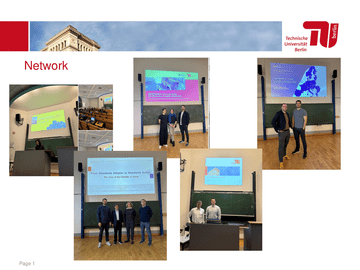
This pilot was conducted by Sokol Tominaj and Knut Blind from the Technical University Berlin in the winter semester 2025/2026. Participants were awarded certificates by DIN that certify an understanding of the fundamentals of standardization. About 40 participants completed the pilot.
To obtain a grade and certificate, participants had to:
- Present a self-chosen and sustainability-related standard in 10 minutes
- Write a term paper of 2000 words on a standards-related topic
- Participate in a final written exam of 60 minutes
- Hand in a multiple-choice question based on every guest lecture
Pilot Objectives
- Develop a profound understanding of standards, the standardisation process and the standardisation landscape
- Understand the economic effects of standards, such as the effect of standards on global trade
- Assess the challenges, effects and benefits of standards across different industries such as the steel industry, energy industry, chemical industry, automotive industry or ICT industry
- Understand the role of standards with regards to the Sustainable Development Goals
- Identify ethical issues of standardisation and gender-related standardisation work and achievements
- Analyse EU standardisation policy, its history and future developments
- Analyse a sustainability-related standard and explain its purpose, application and potential contribution to sustainability.