In-Company Training
Eindhoven University & Tilburg University
Standardisation in High-Tech for Practitioners
The A1 course makes use of 8 content modules, in the form of a slide deck:
• A1.1 Standards and their role in society and industry (44 sheets)
• A1.2 Standard Setting Organizations (37 sheets)
• A1.3 Policy and legal aspects of standards and standardisation (17 sheets)
• A1.4 Standards and patents (35 sheets)
• A1.7 Start participating yourself in a standard-setting (31 sheets)
The A2 course makes use of 5 content modules, in the form of a slide deck:
• A2.1 Standard Setting Organizations (34 sheets)
• A2.2 Policy and legal aspects of standards and standardisation (17 sheets)
• A2.3 Standards and patents (35 sheets)
• A2.4 Competences and Skills for participating in standardisation (31 sheets)
• A2.6 Standards and Trade (23 sheets)
The B1 course (for managers), because of its compact design, makes use of a single content modules, in the form of a slide deck:
• B1.1 EU standardisation policy in the international geopolitical context (29 sheets).
Pilot Overview
The in-company training pilot developed within EDU4Standards is designed to strengthen professionals’ understanding of standardisation and their capacity to engage effectively in standard-setting activities. The programme takes into account the level of experience of the participating professionals. It covers the role of standards in industry and society, the functioning of standard-setting organisations, relevant legal and policy frameworks, standard-essential patents, and the relationship between standards and international trade. It also addresses the increasingly strategic dimension of standardisation, including EU standardisation policy, global developments, digital sovereignty, international partnerships and economic security. Particular emphasis is placed on translating knowledge into practice through interactive discussions, role-playing and serious games, participants’ own experiences, and company-specific perspectives on standardisation. Overall, the pilot tests an adaptable model of in-company education combining technical, legal, economic and geopolitical perspectives with practical skills for participation in standard-setting.
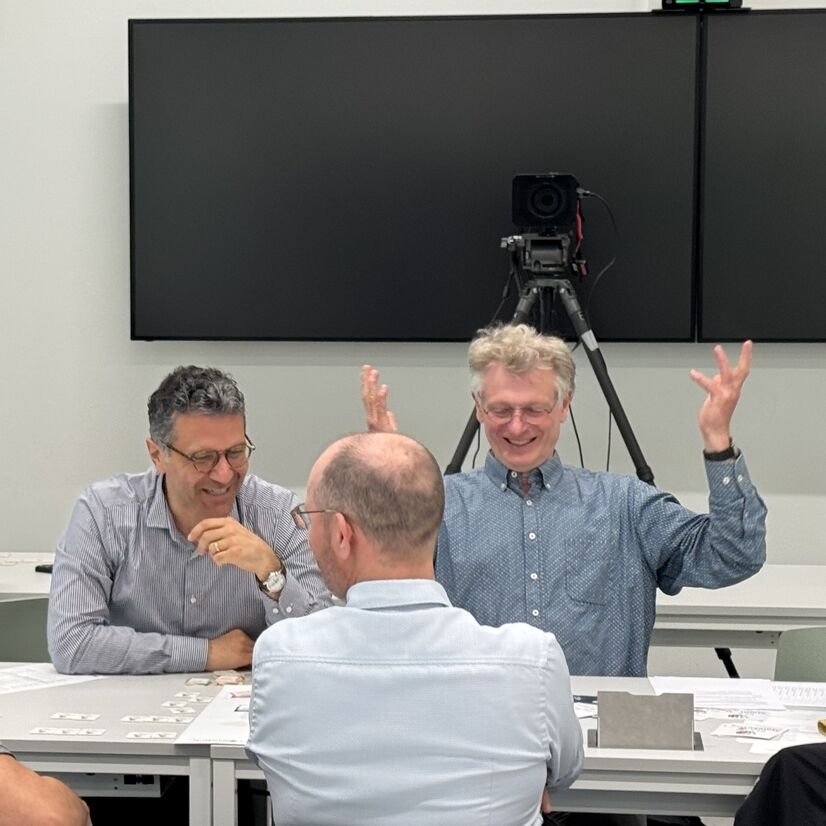
The pilot consists of three distinct courses, aimed at different target audiences:
• Course A1: Younger engineers, in the beginning of their career. Typically have no experience in standardisation.
• Course A2: Mid-career engineers, typically 6-10 years of experience. They may get involved in future standardisation activities.
• Course B1: Senior, higher level managers, e.g., board or marketing positions.
The courses cover the following intended learning outcomes that were developed in Edu4Standards Deliverable 2.1:
Course A1: Levels 4/5
• K4.1: to have a factual and theoretical knowledge in broad contexts regarding standardisation
• K4.3: to have factual and theoretical knowledge of the legal, ethical, environmental and gender aspects related to standardisation
• S4.1: demonstrate knowledge in digital and ICT standards
• S4.2: identify strategies to ensure more respectful cooperation in standardisation processes
• S4.4: determine which form of standardisation (formal vs. informal) is appropriate
• S5.2: assess the need for getting involved in standardisation
Course A2: Levels 5/6
• S5.1: analyse the interactions between standards and the regulatory landscape for ICT
• S5.6: outline the professional activities of a standardisation expert during committee meetings, between organisation meetings, inside his/her own organisation, further activities as a national delegate
• S5.7: be passively involved in standardisation processes (observer)
• S5.8: implement standards in product or process development
• S6.1: be actively involved in standardisation processes (participant)
Course B1: Levels 6/7
• S6.2: illustrate the interactions between standards and the regulatory framework
• S7.2: strategically influence the agenda in standardisation processes
Trainers
Rudi Bekkers, Eindhoven University of Technology; Panos Delimatsis, Tilburg University; Paul Wiegmann, Eindhoven University of Technology; Stephanie Bijlmakers, Tilburg University; Irene Kamara, Tilburg University