The second Academic Standards Day in Sweden took place on 16 October 2026, organised by SIS in Stockholm with medical technology as its main theme. SIS again partnered with SEK, so students saw medtech standardisation and electrotechnical standardisation as parts of one whole. New this year, the day was planned together with two student associations: the Chapter for Medical Technology (MiT) and MALVINA, the network for female and non-binary students. As in the first edition, students came from several universities, including KTH, Karolinska Institutet, Linköping University, Uppsala University, Mälardalen University, Örebro University and Högskolan Dalarna. These were mainly medical technology students, with a broader mix of disciplines than last year's ICT focus, including computer engineering, health informatics and neurotechnology, as well as doctoral students.
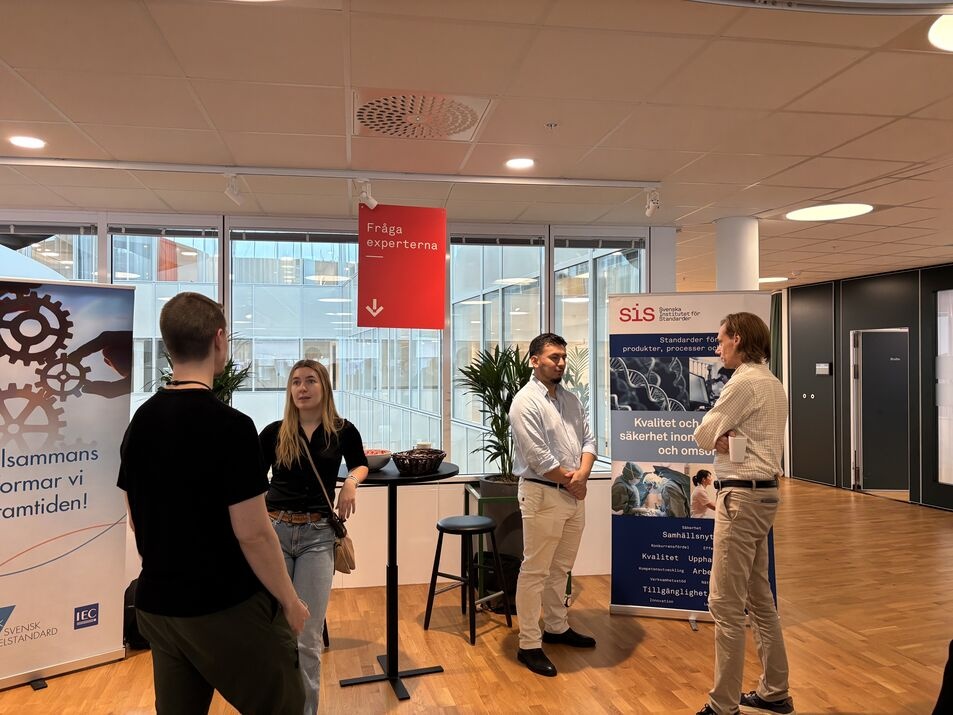
The programme kept the format that worked well last year: short presentations from different perspectives, a panel discussion and plenty of time for mingling. The speakers came from standardisation, industry, testing, academia and consulting, and together they traced the whole chain from idea to patient. Standards emerged as a common language between all the links in that
chain. The speakers took us on a journey through how standards support medtech. They help innovation spread and reach the market, and with over 200,000 health apps in Sweden they give users and healthcare providers a shared basis for trust. Together with regulation, they form the route to CE marking. Research on brain training for stroke rehabilitation showed technology moving closer
to the patient. Young consultants explained how they use standards daily in their client work. The closing panel covered interoperability, health informatics and app quality assurance, and looked ahead to future standardisation needs.
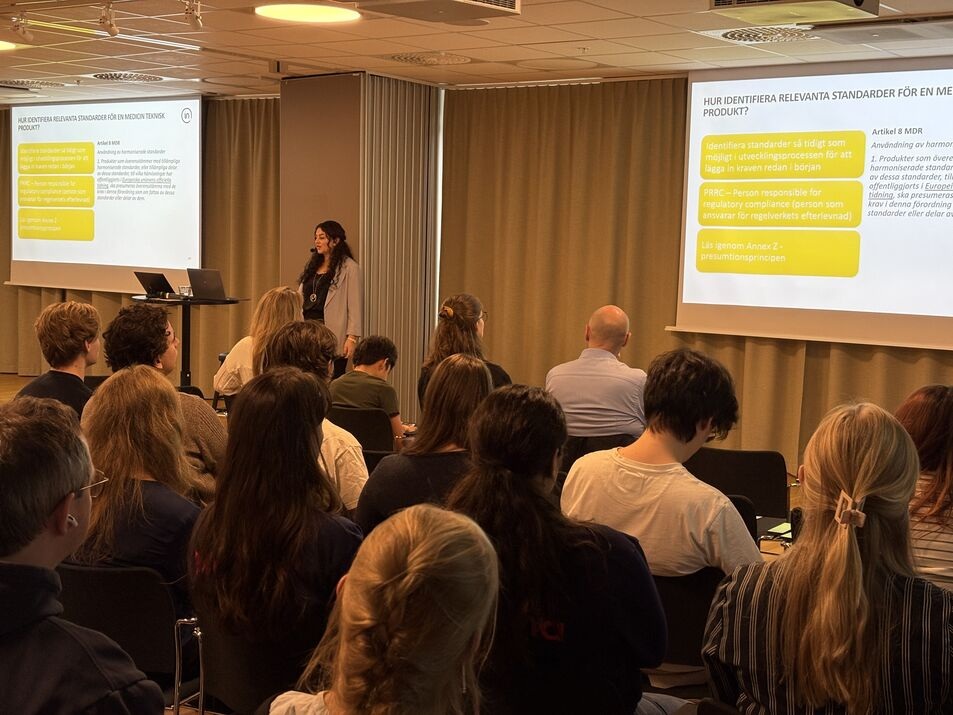
Throughout the day, students saw how different standards apply in different contexts. Companies were also part of the mingling sessions, with dedicated posters and stands where students could talk to them directly. The companies shared career opportunities in the field, which brought standards even closer to the students' future careers. Students were also excited to learn that their university libraries give them access to this goldmine of standards. The programme showed how standards can be a real asset if they choose to start their own company, and a practical support in their jobs once they enter the market. The student associations were keen to explore this further with SIS and hope to follow up with another event on campus.
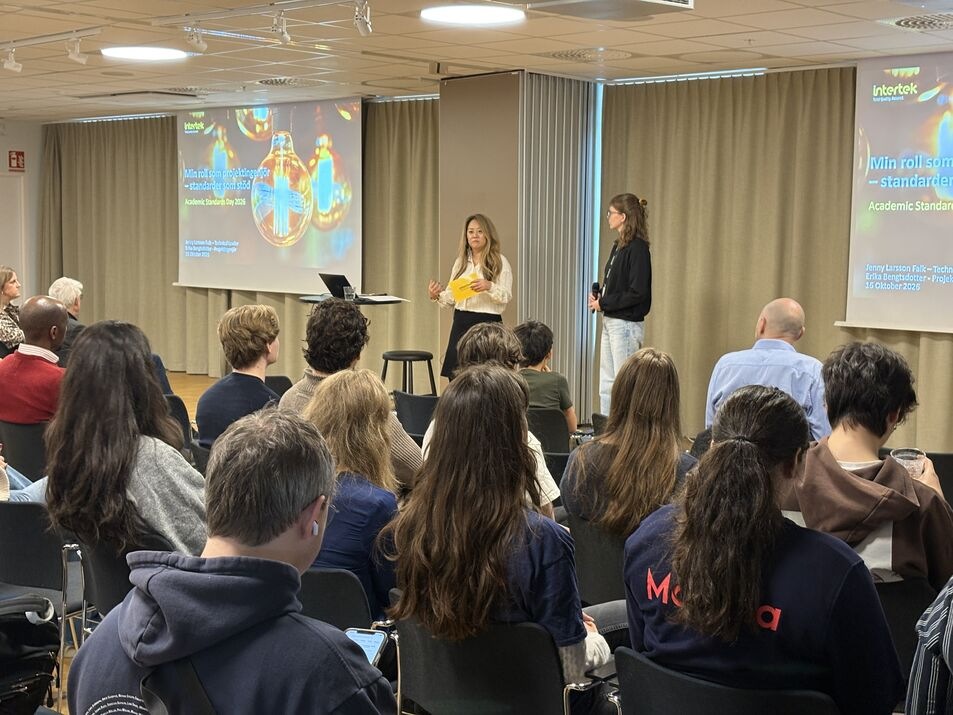
With the support of EDU4Standards, SIS has now established Academic Standards Day as an annual event.
Keeping with tradition, SIS will partner with new universities each year, exploring how standards permeate the study disciplines of students across Sweden. The aim is to equip future generations with state-of-the-art knowledge of how things work, and to invite them to shape the standards of tomorrow.